Table of Contents
Digital marketing gives businesses more ways than ever to reach customers. It also gives customers more messages than ever to ignore.
Emails compete for attention in crowded inboxes. Social posts disappear quickly from feeds. Digital ads can be scrolled past in seconds.
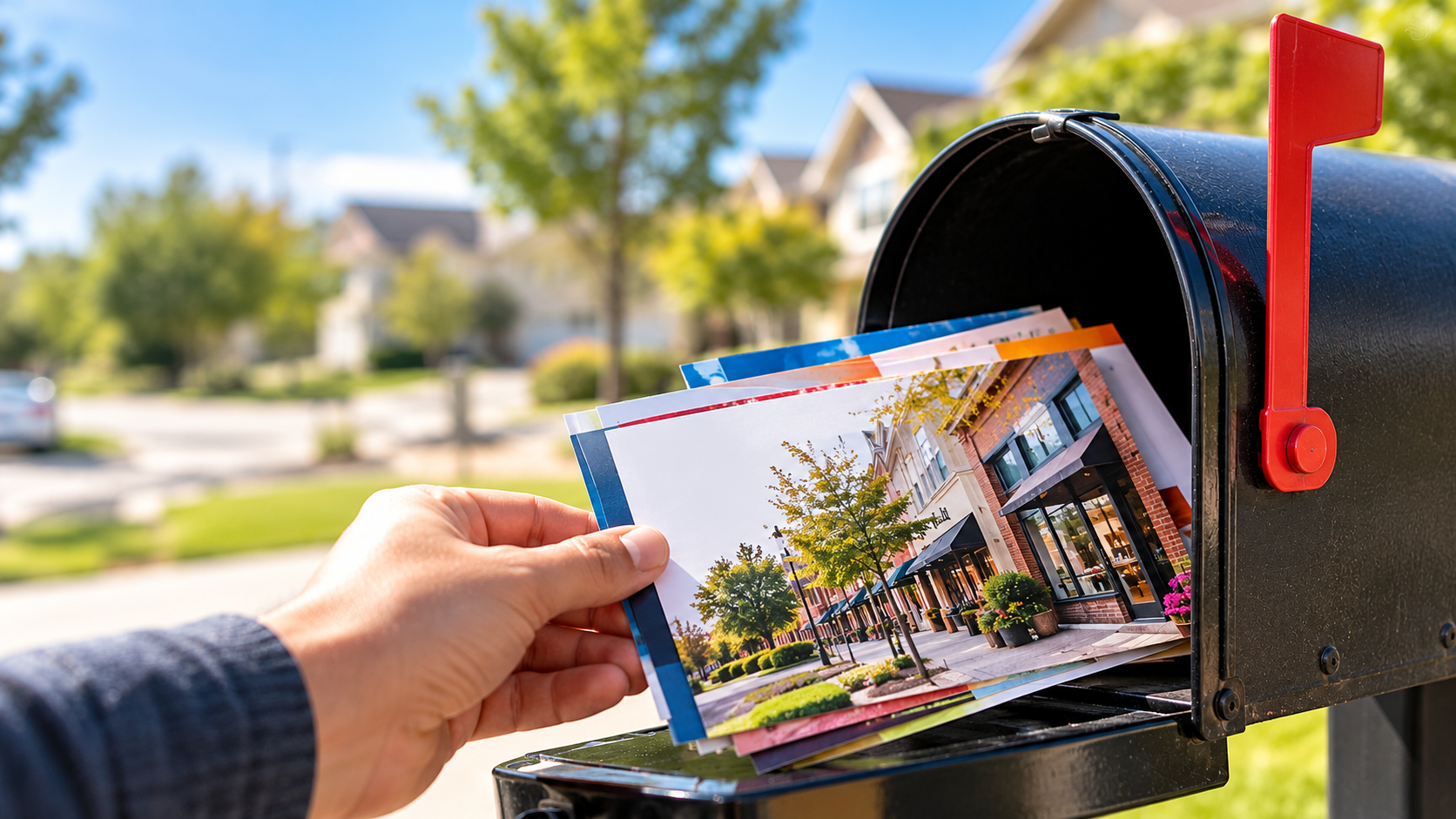
Direct mail marketing provides a different opportunity: putting a physical message directly into the hands of the people you want to reach.
But a successful direct mail campaign involves more than printing a postcard and dropping it in the mail. Strategy, audience selection, design, printing, mailing preparation, and timing all play a role in the results.
Here are seven ways businesses and organizations can build a more effective direct mail marketing.
1. Start With a Clear Goal
Before choosing a postcard size or developing the design, determine what you want the campaign to accomplish.
Are you trying to:
- Generate new leads?
- Promote an event?
- Drive traffic to a location?
- Introduce a new product or service?
- Reconnect with previous customers?
- Reach households in a specific geographic area?
- Encourage recipients to visit a landing page?
Your goal influences everything from the audience and mailing format to the offer and call to action.
A campaign designed to generate appointments, for example, should look very different from a mailer announcing a community event.
2. Choose the Right Direct Mail Audience
One of the biggest decisions in direct mail marketing is deciding who should receive your message.
Businesses generally have two approaches.
Targeted Mailing Lists
A targeted campaign allows you to mail to a specific customer or prospect list. Depending on the campaign, lists can be segmented based on characteristics such as geography, customer status, demographics, or other relevant criteria.
Existing customer data can also make it possible to tailor messages to different groups.
Every Door Direct Mail (EDDM)
Every Door Direct Mail can be useful when geography matters more than identifying individual recipients.
For example, a local business may want to reach households within selected postal routes surrounding its location.
EDDM can be particularly useful for businesses promoting local services, openings, events, seasonal offers, and other geographically focused campaigns.
Suggested internal link: Prestige Direct Mail/EDDM service page.
3. Give Recipients a Reason to Pay Attention
A direct mail piece has only a few seconds to make an impression.
The message should quickly answer three questions:
What is this?
Why should I care?
What should I do next?
That doesn’t necessarily mean offering a discount. A compelling reason to respond could be an invitation, useful information, an important deadline, a new service, an appointment, or a special event.
The important thing is clarity.
Trying to communicate five different messages on one postcard usually weakens all five.
4. Design for the Mailbox, Not Just the Screen
A beautiful design on a computer monitor doesn’t automatically translate into an effective mail piece.
Direct mail design needs to account for the physical format, printing requirements, postal regulations, readability, and the way recipients will actually interact with the piece.
Important considerations include:
- Clear visual hierarchy
- Easy-to-read typography
- Strong contrast
- Appropriate image resolution
- Correct bleeds and margins
- Mailing and postal areas
- A prominent call to action
- Brand consistency
The goal isn’t simply to make the piece attractive. The design needs to help the recipient understand the message quickly.
5. Connect Direct Mail With Your Digital Marketing
Direct mail marketing doesn’t have to compete with digital marketing. The two can work together.
A printed piece can direct recipients to:
- A dedicated landing page
- An online registration form
- A specific product or service page
- A QR code
- A phone number
- An appointment scheduler
- A promotional code
This creates a bridge between a physical interaction and a measurable digital action.
It also makes it easier to determine whether your campaign is generating engagement.
6. Plan Printing and Mailing Together
This is one of the most important—and often overlooked—parts of a direct mail marketing.
Printing is only one step.
Before a campaign reaches the mailbox, there may also be mailing-list preparation, address verification, variable data, postal optimization, sorting, finishing, and fulfillment.
Coordinating these steps separately can add complexity and create opportunities for delays.
Working with a commercial printer that can help coordinate both production and mailing allows decisions to be made with the entire campaign in mind.
Prestige Printing & Graphics can assist with services including:
- Direct mail printing
- Mailing list support
- Variable data printing
- Address verification
- Postal optimization
- Sorting and preparation
- Fulfillment
This allows businesses to manage the campaign from printing through mailing with one experienced partner.
7. Think About Timing Before You Print
Timing can significantly affect a campaign.
The original Prestige content correctly identifies fall as an especially useful period for direct mail marketing because businesses can coordinate campaigns around holiday promotions, community events, Black Friday, and other seasonal activity.
But the principle applies throughout the year.
Businesses can plan campaigns around:
- Grand openings
- Seasonal promotions
- Fundraisers
- Conferences and trade shows
- School enrollment periods
- Community events
- Annual renewals
- New product launches
- Important deadlines
Start with the date you want recipients to receive the piece and work backward. Build in enough time for design, proofing, production, finishing, postal preparation, and delivery.
Is Direct Mail Marketing Still Effective?
Direct mail marketing continues to offer something digital marketing cannot: a tangible piece that arrives in a recipient’s physical mailbox.
That doesn’t mean print should replace digital marketing.
Instead, organizations can use print as another touchpoint within a broader campaign.
A recipient might see your business on social media, receive a postcard several days later, scan a QR code, visit your website, and eventually contact your team.
The value is often in how those interactions work together.
The existing article also makes a useful point here: physical mail can provide a more tangible experience when audiences are surrounded by emails, social advertising, and other digital promotions.
Frequently Asked Questions About Direct Mail Marketing
What is direct mail marketing?
Direct mail marketing involves sending physical promotional or informational materials to a selected audience through the mail. Common formats include postcards, letters, self-mailers, brochures, and other printed pieces.
What is EDDM?
Every Door Direct Mail, or EDDM, is a U.S. Postal Service program that allows businesses to reach addresses along selected postal routes without maintaining an individual mailing list.
What is the difference between EDDM and targeted direct mail?
EDDM focuses primarily on geographic postal routes. Targeted direct mail uses a specific mailing list and can provide more control over who receives the campaign.
Can direct mail marketing work with digital marketing?
Yes. QR codes, landing pages, promotional codes, phone numbers, and other response mechanisms can connect a printed mailer to digital campaigns and help businesses measure responses.
What should I include in a direct mail piece?
Most successful pieces need a clear message, recognizable branding, a reason for the recipient to pay attention, and an obvious next step.
How early should I start planning a direct mail campaign?
Timing depends on the project’s complexity, quantity, mailing requirements, and desired in-home date. Starting early provides time for list preparation, design, proofing, printing, finishing, and postal preparation.
Make Your Next Direct Mail Campaign Easier to Manage
Effective direct mail marketing requires a lot of moving parts to work together.
Prestige Printing & Graphics helps Bay Area businesses and organizations coordinate the process—from professional printing and variable data to mailing preparation and fulfillment.
Planning a direct mail campaign? Talk with Prestige about the best way to print, prepare, and deliver your next mailing.